
Building a custom luxury home in the Okanagan Valley is an exciting journey – but it’s also a major investment. To plan confidently, it’s crucial to understand hard costs vs. soft costs in your homebuilding budget. These two categories cover every dollar spent on your project, from the concrete in your foundation to the permits and insurance behind the scenes. In this guide, we’ll explain the difference, give clear examples, and show why transparency about both hard and soft costs protects you from budget surprises.
Hard Costs: The Bricks and Sticks of Your Home
Hard costs (also called *“brick-and-mortar” or “tangible” costs) are the expenses directly related to the physical construction of your home. In other words, these are the “sticks and bricks” – the things you touch and see in the finished house. Hard costs typically comprise the bulk of a construction budget (often around 70-80% of the total) and are easier to estimate because they involve tangible materials and labour. They usually occur during the active building phase and generally stop once construction is complete
Examples of Hard Costs include:
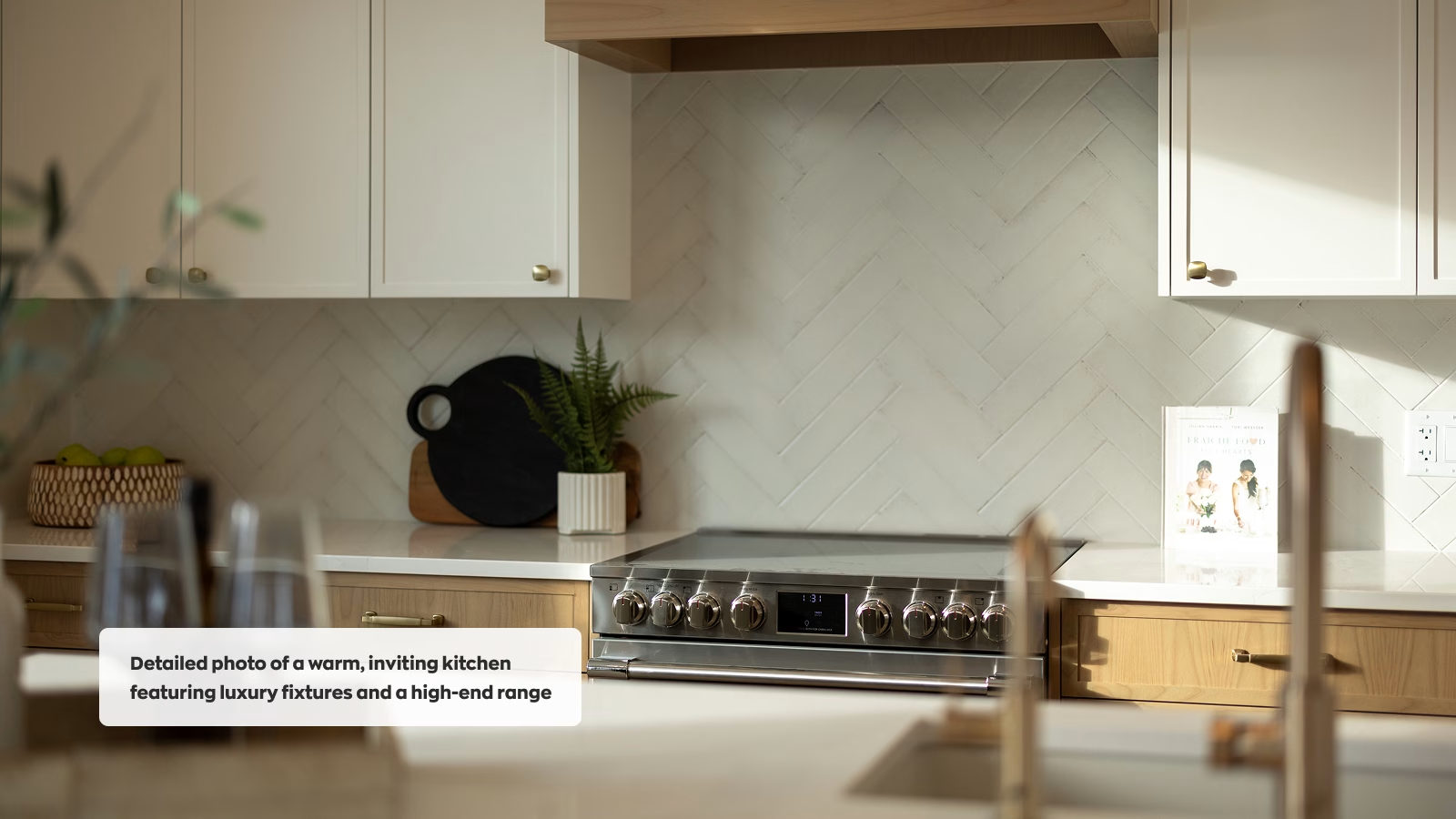
Materials: Lumber, concrete, steel, drywall, roofing, nails, insulation – every physical component that goes into building the structure. This also covers interior finishes like flooring, tiles, countertops, paint, and fixtures.
labour: The wages for your construction crew and tradespeople (carpenters, electricians, plumbers, etc.) who bring the project to life. It also includes specialized subcontractors for things like HVAC installation or custom cabinetry.
Equipment and Site Work: Any machinery or tools needed (cranes, excavators, scaffolding) and site preparation costs like excavation, grading, temporary utilities, and building access roads. Even elements like foundation work, framing, and landscaping (trees, lawns, irrigation) fall into hard costs because they contribute to the physical property.
Hard costs are the most visible part of your budget. These expenses directly influence the look, structure, and quality of your home. They’re also typically locked in by your project’s scope: if you change the floor plan or opt for pricier finishes, the hard costs change accordingly. Because they’re tied to bricks and mortar, hard costs are usually straightforward to track and control with proper planning (barring market volatility in material prices).
Soft Costs: The Behind-the-Scenes Essentials
Soft costs, by contrast, are the indirect or intangible expenses that are not physically part of the house but are necessary to plan, build, and complete the project. These often cover professional services, fees, and contingencies that ensure the project runs smoothly and complies with all requirements.
Soft costs typically span the entire project timeline – from initial design and permits through post-construction wrap-up – and can even continue after move-in (for example, loan interest or legal fees). They are usually a smaller portion of the total budget than hard costs, but they are absolutely critical to a successful build.
In many projects, soft costs might account for roughly 20-30% of the budget, though they can be higher depending on the project’s complexity.
Examples of Soft Costs include:
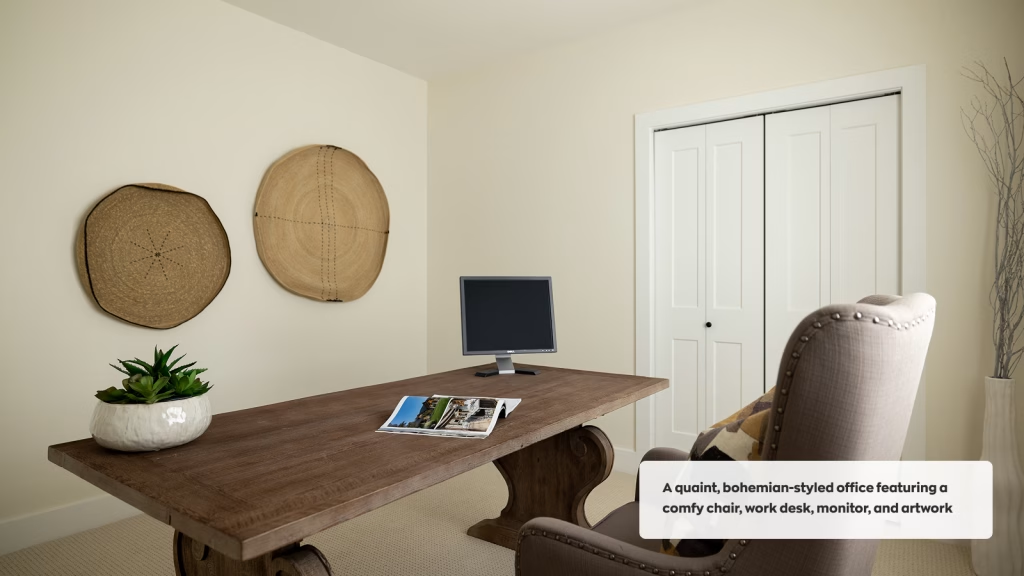
Design & Engineering Fees: The charges for your architect, home designer, interior designer, and engineers. Crafting a custom home in the Okanagan means engaging professionals to draw up plans, structural engineering, and often interior detailing – all of which are billed as services, not bricks.
Permits & Municipal Fees: Every new home or major renovation needs permits and inspections. Soft costs include building permit fees, development charges, environmental assessments, and any surveying or zoning applications required by local authorities. These steps might not be glamorous, but they’re legally required to build and occupy your home.
Insurance and Warranty: Builders must carry insurance to protect the project and your investment. For example, general liability insurance, workers’ compensation, and builder’s risk insurance fall under soft costs. These cover potential issues like job-site injuries or property damage during construction. Similarly, any home warranty provision or performance bond is a soft cost.
Project Management & Administration: This includes the cost of managing the project’s schedule, budget tracking, and quality control. Whether your builder has a dedicated project manager on-site or uses a construction management platform, the work of planning, coordinating trades, and keeping everything on track is accounted for as a soft cost. It also covers jobsite facilities and general conditions.
Financing Costs: If you are using a construction loan or mortgage, the interest payments and loan origination fees during the build are soft costs. These “cost of money” expenses don’t create any physical part of the house, but they are very real costs of building. The longer the build, the more interest accrues.
Consultants & Miscellaneous Fees: Legal fees for contract review, accounting fees, or energy modelling consultants would also be soft costs. Even marketing or real estate costs (if, say, you were building a spec home to sell) fall in this category, as do moving costs or furniture for staging a home after construction.
Soft costs are often less obvious to homeowners because they’re not seen on the finished blueprint – you can’t point to a permit and say “there’s my money.” However, they are essential for a successful project: they cover the professional expertise, safety measures, and regulatory compliance that turn the hard costs into a livable, high-quality home.
Neglecting soft costs isn’t an option; you either pay them up front or risk issues down the line (like construction delays if permits aren’t in place, or liability if insurance is missing).
How Soft Costs Impact Your Budget (and Why They’re Worth It)
Even though soft costs are less visible, they can significantly impact your overall budget. Industry data shows soft costs typically account for about one-quarter to nearly half of total project costs.
For a luxury custom home, that means the “behind the scenes” expenses might amount to hundreds of thousands of dollars in design, permitting, insurance, and management. Failing to account for this upfront can lead to budget overruns later – no one wants to be midway through a build only to realize you’re 30% over budget because the permitting and engineering fees were overlooked!
It’s important to see soft costs as investments in quality and risk management. For example, spending on a talented architect’s design fee can actually save money by preventing costly mistakes or changes later. Paying for proper permits and inspections ensures your home meets code, avoiding potential fines or having to redo work. However, soft costs can also be an area of confusion. Unlike a line item for, say, hardwood flooring (where you can easily understand the cost per square foot), soft costs may feel abstract. This is why transparency is key. You deserve to know where every dollar is going and why it’s important. When all soft costs are clearly detailed in your budget, you can make informed decisions and prioritize what matters most to you.
Beware of “Missing” Soft Costs in Estimates
One thing to watch out for when comparing builders: some builders may leave soft costs out of their initial estimates, whether unintentionally or as a sales tactic. Unfortunately, we’ve heard many stories of homeowners feeling sticker shock when those “extra” bills come due.
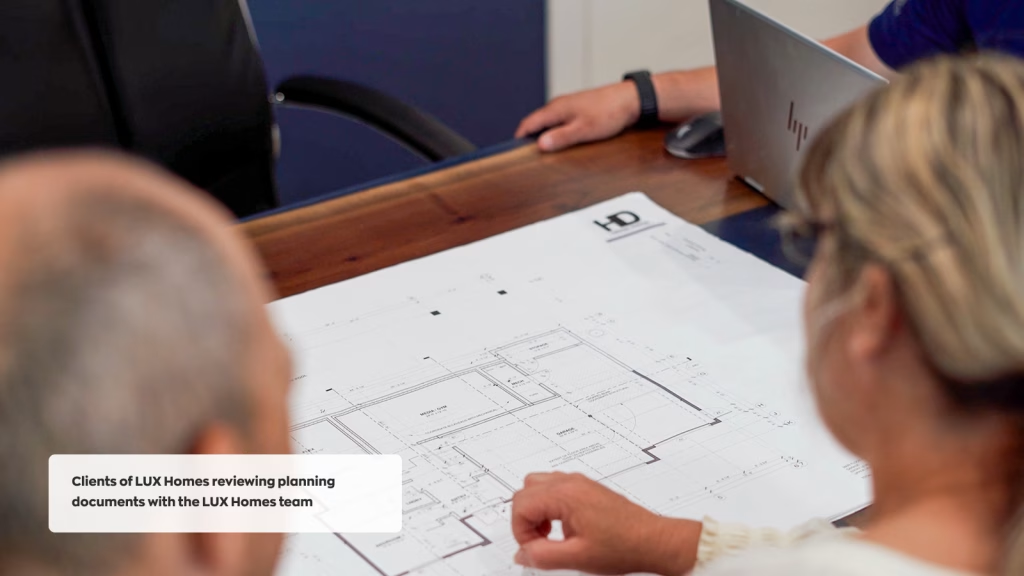
A telltale sign is an estimate that only lists basic construction tasks and materials but is vague about fees or project management. If you don’t see line items for things like permits, design, or insurance, it’s important to ask questions. A truly professional, client-focused builder will be upfront about all costs involved in building your home.
At LUX Homes, we’ve made it a core principle that there should be zero mystery in your budget. In fact, our philosophy is: no surprises, no hidden extras. Sadly, not all builders take that approach. We know that many builders lure customers with low prices, only to inflate costs with unexpected changes and budget overruns. This often happens when soft costs haven’t been fully disclosed early on. Our advice is to insist on transparency. Your peace of mind during a major project depends on knowing that everything is accounted for.
Faster, More Efficient Construction = Lower Soft Costs
Understanding hard vs. soft costs is a big step toward a successful home build. When you know what goes into your project – from the concrete in the footings (hard cost) to the insurance policy protecting the site (soft cost) – you can plan with eyes wide open. At LUX Quality Homes, we’re passionate about guiding our clients through this process with transparency, expertise, and warm partnership. We want you to feel as comfortable with the budget as you are with the design of your future home.
If you’re considering building or renovating a luxury home in the Okanagan, let’s ensure your experience is rewarding and worry-free. We invite you to book a consultation with the LUX team. It’s an easy, no-pressure chat about your vision, budget, and timeline. We’ll answer your questions, explore ideas, and show you how our open-book, on-time, on-budget approach can bring your dream home to life. Get in touch with us today!

Ready to Build Your Dream Home? Let’s Talk
Time truly is money in construction, especially when it comes to soft costs. A well-managed, efficient build not only brings you into your dream home sooner, but also reduces the soft costs that accrue over time. How? Many soft costs, such as construction loan interest, insurance premiums, and project management salaries, are time-dependent. The longer your project drags on, the more months you’re paying for things like site supervision, equipment rentals, and insurance coverage.
Extended construction schedules result in prolonged administrative and financing expenses, which can drive up soft costs significantly. In contrast, a faster timeline means fewer months of those indirect costs.
At LUX Homes, our motto is “On time. On budget.” for a reason. We focus on efficiency and meticulous scheduling to avoid unnecessary delays. For our clients, this directly translates into savings. Over a lengthy custom build, savings can be substantial. Efficient building practices – like careful project planning, prompt decision-making in the design phase, and leveraging technology for project management – all help compress the schedule without sacrificing quality.