
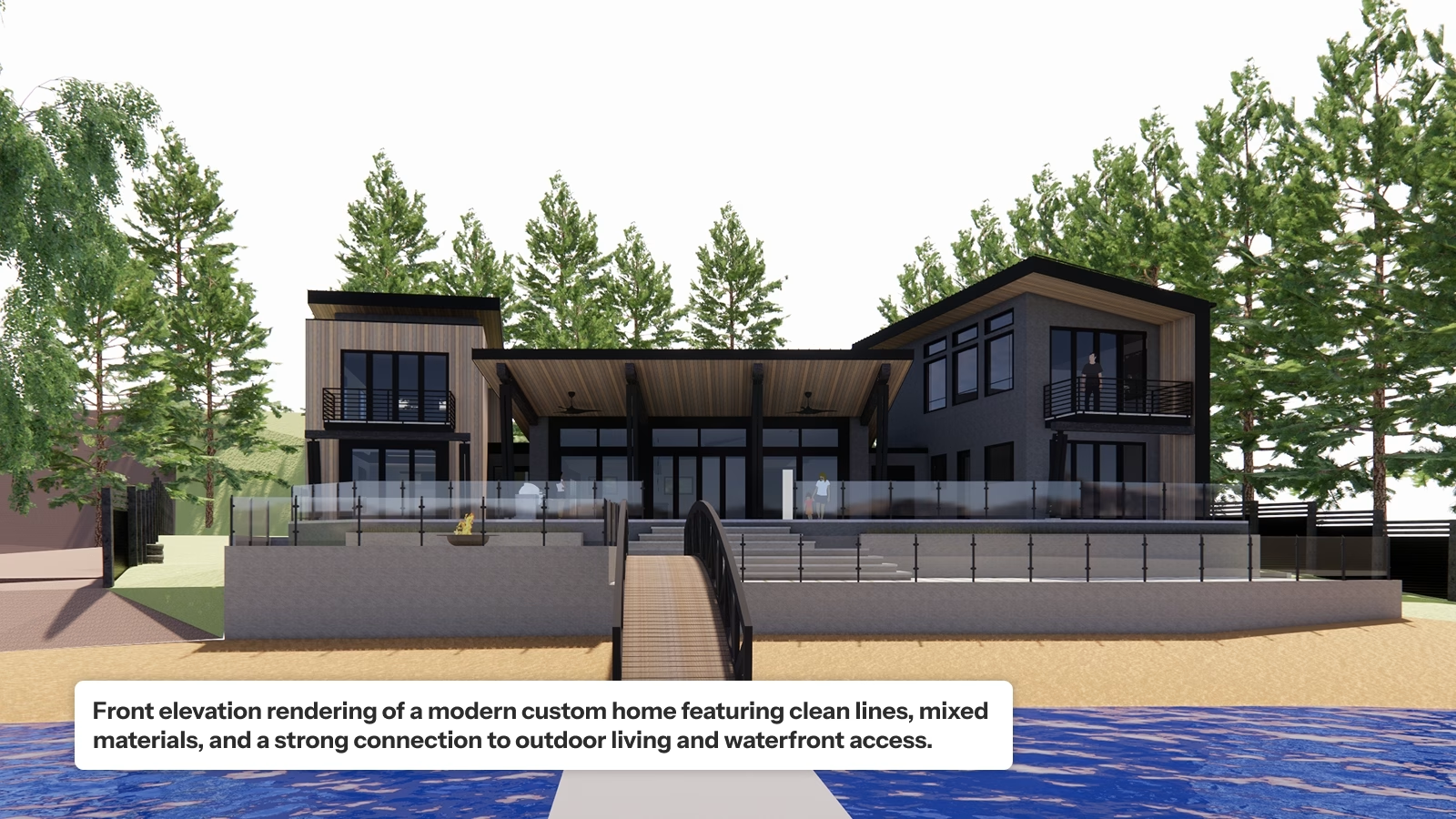
Most people have never built a custom home before. They arrive at the design phase with a clear sense of what they want (a certain feeling, a certain flow), but translating that vision into construction drawings is genuinely hard to do in the abstract. Floor plans are useful, but they’re flat. Sketches help, but they leave a lot to the imagination. And once the framing goes up, changing your mind can get very expensive very quickly.
That’s exactly why 3D home rendering has become one of the most valuable tools in the custom home building process. At LUX Homes, architectural visualization isn’t a premium add-on. It’s a standard part of how every custom home in Kelowna is designed and refined before a single shovel hits the ground.
What Is 3D Home Rendering, and How Does It Work?
A 3D rendering is a photorealistic digital image of your home, generated from the architectural drawings and design selections made during the planning phase. Where a 2D floor plan shows you walls, doors, and dimensions on paper, a 3D rendering shows you what the space will actually look like: the light coming through the windows in the afternoon, how the kitchen island relates to the living room, and whether the ceiling height feels as generous in practice as it does on a spec sheet.
The process begins during LUX Homes’ design phase, where the team works through every aspect of your build: floor plans, colour palettes, surfaces, fixtures, and exterior finishes. As those selections are made, they’re translated into three-dimensional models that let you evaluate the home visually before any structural decisions are locked in. This is the moment to catch things: the island that’s slightly too large, the hallway that feels narrower than expected, the window placement that doesn’t quite capture the Okanagan view you were hoping for.
Virtual Walkthroughs: Moving Through Your Home Before It Exists
Beyond static 3D images, we can also arrange virtual walkthroughs and 2D modelling that let you interactively navigate through the design of your home. Rather than looking at a picture of a room, you experience the spatial relationships between them: how the entry connects to the main living area, how natural light moves through the home at different times of day, how the flow from the kitchen to the outdoor living space actually feels.
This is particularly valuable for difficult-to-evaluate decisions. A kitchen layout might look efficient as a floor plan, but feel cramped once you’re “standing” in it. A primary suite might appear well-proportioned until you walk the virtual path from the bed to the ensuite and realize the door swings into an awkward position. These are exactly the kinds of details that are inexpensive to fix at the rendering stage and costly to address once construction is underway.
For clients building in Kelowna and the broader Okanagan Valley, where lot orientations and lake views play such a significant role in how a home is designed, virtual walkthroughs also offer the ability to model solar orientation and sight lines, ensuring the home is positioned to make the most of its setting before the foundation is poured.
How Early Visualization Prevents Costly Change Orders
Change orders are among the most common causes of budget overruns in custom home construction. They happen when a client notices during the build that something doesn’t match what they had in mind and requests a modification. Sometimes those changes are minor. Sometimes they involve reopening walls, relocating plumbing, or reworking structural elements that have already been completed. The later a change is made in the construction process, the more expensive it becomes.
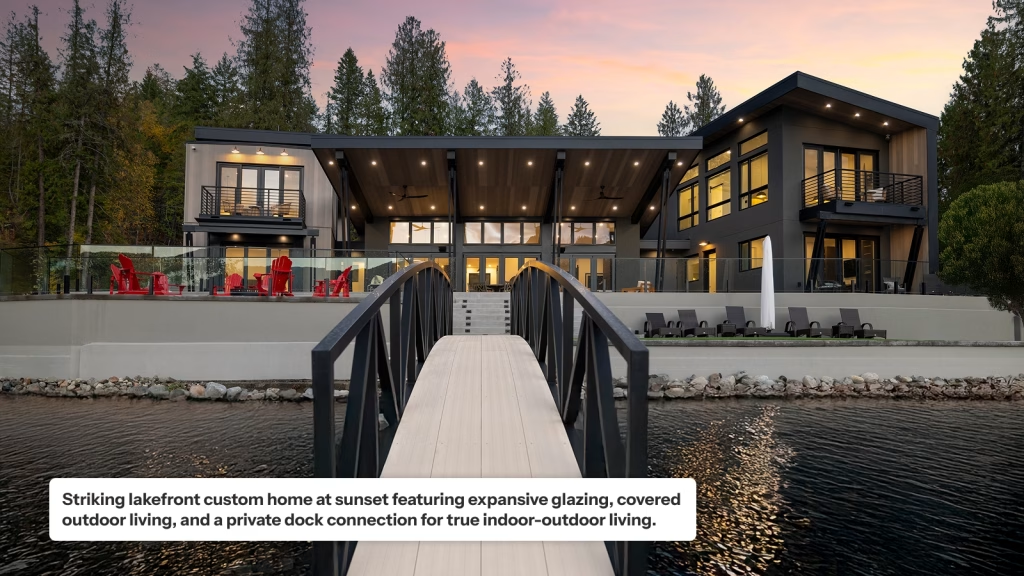
The primary purpose of 3D rendering and virtual walkthrough technology is to move as many of those decision points as possible into the design phase, where adjustments cost time rather than money. When you can see and experience your home before construction begins, you make better decisions. You confirm what you love and catch what isn’t quite right while it’s still easy and inexpensive to address.
This is central to how we approach the design-build process. The Preliminary Building Agreement that kicks off every custom build is a detailed, comprehensive document that locks in every selection, down to model numbers, before construction begins. Renderings and virtual walkthroughs are key to making that level of certainty possible. We give clients the confidence to commit to their selections because they’ve actually seen how everything comes together.
What You Can Expect to See in a LUX Homes Rendering
The level of detail in a professional 3D rendering goes well beyond a rough sketch or concept image. For a LUX Homes custom build in Kelowna, renderings typically include exterior elevations showing the home from multiple angles with realistic material textures and landscaping context, interior perspectives of key spaces (kitchen, living areas, primary suite, outdoor transitions), lighting simulations that show how the space reads in natural and artificial light, and finish selections displayed in context so you can evaluate how your chosen materials work together in the actual space rather than as separate samples.
This kind of architectural visualization also serves a practical purpose beyond client decision-making. Detailed renderings provide the construction team with a precise reference point throughout the build, reducing the likelihood of interpretation errors between the design and the build. When everyone is working from the same visual reference, the result is a home that matches the vision far more closely.
Lux Home Design: Where Visualization Meets Craftsmanship
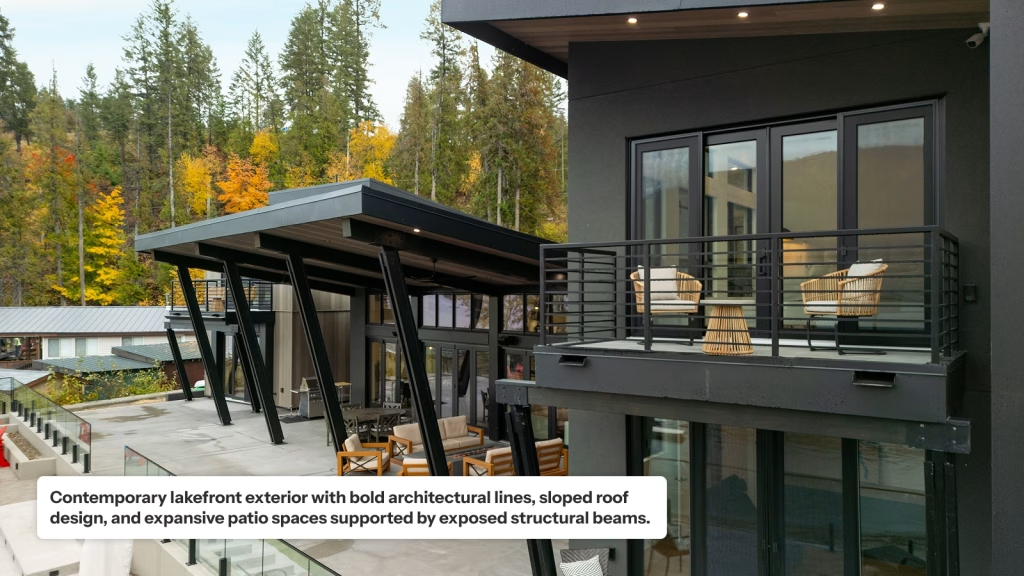
At LUX Homes, the design and build phases aren’t separate engagements managed by separate teams. They’re part of a single, integrated process managed under one roof. That means the people creating your renderings are in direct communication with the people building your home. Design decisions are grounded in real-world construction knowledge, so the home you see in the rendering is the home that actually gets built, not an idealized version that encounters compromises when it meets the realities of the job site.
For anyone considering a custom home in Kelowna or the Okanagan Valley, that alignment between design intent and construction execution is one of the most significant advantages of the design-build model. It’s also one of the hardest things to achieve when design and construction are handled by separate parties with separate incentives.
If you’re in the early stages of planning a custom home and want to understand how the visualization process works and what it looks like for your specific vision and lot, we offer a commitment-free discussion to walk you through the process. Learn more about what each phase of the LUX Homes build process involves.
Frequently Asked Questions
3D home rendering is the process of creating photorealistic digital images of a home based on architectural drawings and design selections. It allows homeowners to see exactly what their custom home will look like, inside and out, before construction begins.
When paired with a thorough design process and detailed specifications, 3D renderings are highly accurate representations of the finished product. At LUX Homes, renderings are developed alongside the Preliminary Building Agreement, ensuring that every selection shown in the rendering corresponds to what will actually be built.
Yes, and that’s the whole point. Renderings are created specifically to give you the opportunity to review, refine, and confirm your design before construction begins, when changes are straightforward and cost-effective.
LUX Homes can arrange renders and 2D modelling as part of the design phase so clients can see and walk through their home design before construction starts. This is available for custom home builds as part of the design-build process.