
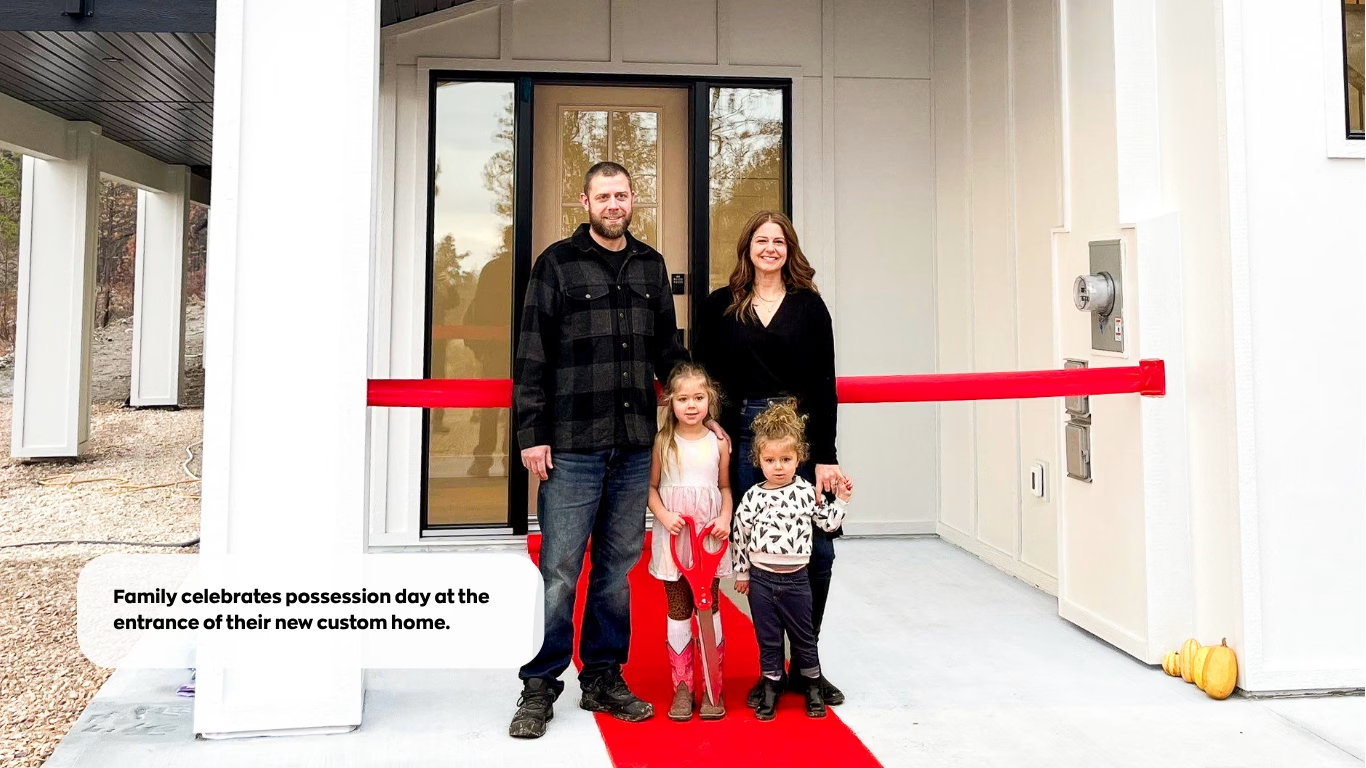
There’s a real debate happening in the custom home industry about how construction projects should be priced. It’s worth having honestly, because the model your builder uses doesn’t just affect your invoice… it shapes the entire experience, from the first conversation to the day you get your keys.
So, what exactly is the difference between fixed-price vs. cost-plus? We’re a custom Okanagan home builder with expertise in both, and you can read all about it here. But that’s not the focus today. Instead we’re taking a closer look at the advantages and drawbacks of each pricing model. The truth is, both exist for good reason. Cost-plus contracts have their place, and they can work well in the right circumstances. But for a custom luxury home build, the question is not which model is more common. The question is which one actually protects you all the way to possession day.
The Incentive Problem: Who Benefits When Costs Rise?
This part of the conversation doesn’t get talked about enough.
With a cost-plus contract, the builder charges you their actual costs. Materials, labour, and subcontractors, plus a management fee, typically somewhere between 10 and 18%. On the surface, that sounds fair. You see every invoice. You know what everything costs.
But here’s the problem: the builder makes more money when the project costs more. If the preliminary budget was off, you pay the overrun. You also pay the markup on that overrun. There’s no financial incentive for the contractor to budget accurately or manage costs efficiently, because their margin is protected either way.
As a large-scale ERP platform used in over 200 countries and territories, Oracle NetSuite does a great job explaining the risks of cost-plus in general terms here. Simply put, “with a fixed-price contract, the bulk of the risk rests on the contractor” and with a “cost-plus contract, the project owner assumes more risk should a project’s costs exceed expectations.”
LUX Homes absorbs cost overruns. If lumber prices spike after we break ground, that’s our problem to solve, not yours as the homeowner. That one structural difference changes everything about how a builder approaches budgeting, scheduling, and decision-making on your project.
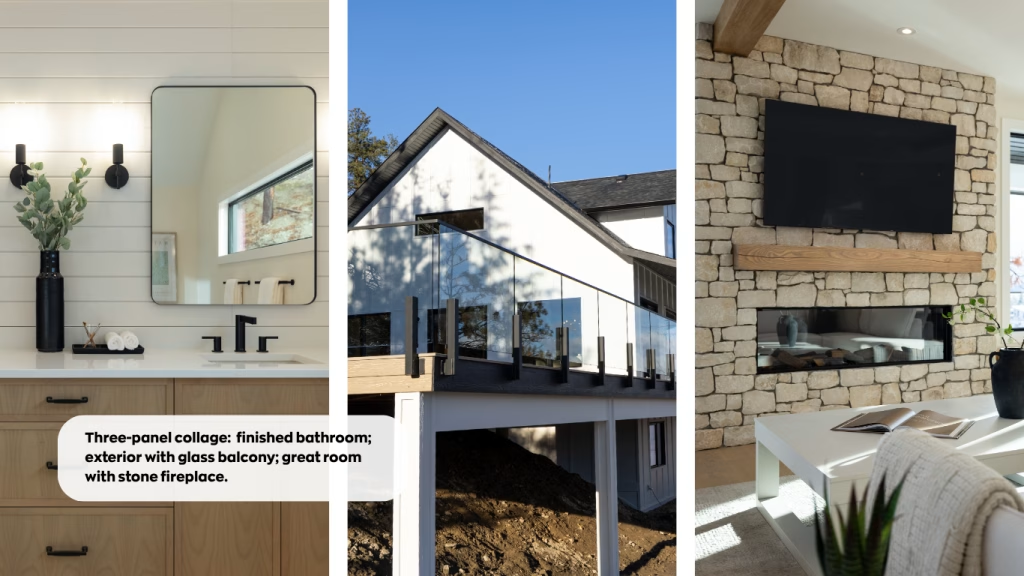
What "Fixed-Price" Actually Requires: the LUX Homes Process
The criticism you hear about fixed-price vs. cost-plus contracts is that they include worst-case contingencies and allowances the client never actually needs. You are essentially pre-paying for builder risk.
Although this could apply to a fixed-price quote built on rough assumptions and a handshake, but it doesn’t apply to how LUX Homes executes a fixed-price contract.
Before construction starts, LUX Homes runs every project through a Preliminary Building Agreement (PBA). It covers every selection from finishes, fixtures, flooring, appliances, everything. All allowances are specified and documented. The full scope, layout, and specifications are locked in. Scheduling and trade coordination are confirmed. The PBA runs over 150 pages.
This document is what makes the fixed price real and not just a ballpark. It’s a complete, written record of exactly what you’re getting and exactly what it will cost. Most tension in a custom home build doesn’t come from bad trades or bad weather. It comes from two parties remembering a conversation differently. The PBA eliminates that problem before it starts.
Does getting there take time? Absolutely. It can take months longer than simply signing a contract and starting construction, but that’s not a flaw in the process. That is the process. The upfront time investment is what protects the schedule, the budget, and your peace of mind once construction is underway.
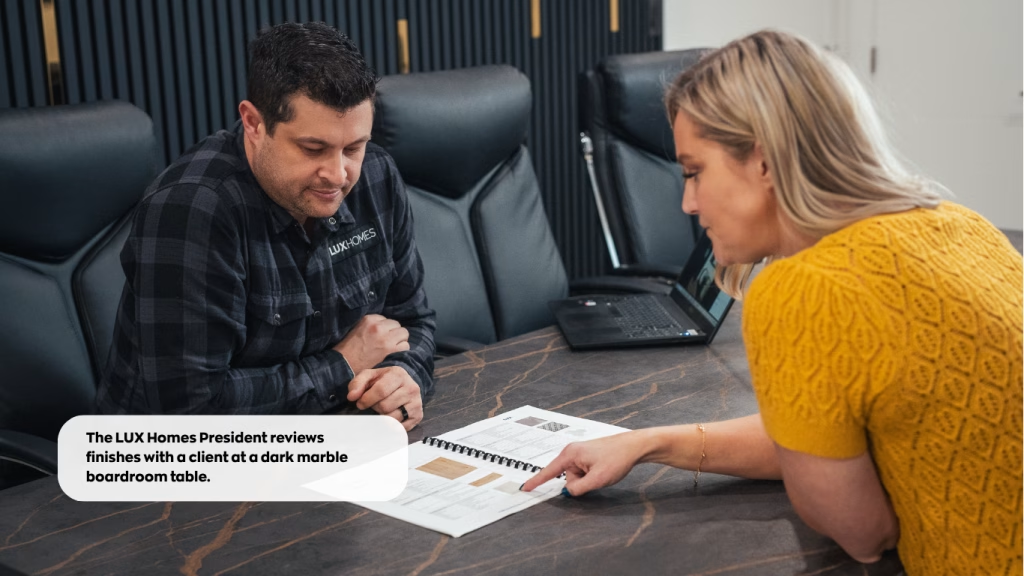
Transparency Redefined: Accountability by Design
Cost-plus advocates often describe their model as more transparent because the client sees every receipt and every invoice. We understand the appeal of that. When you’re spending this kind of money, you want to know where it’s going.
But there’s a difference between accountability by audit and accountability by design.
Showing you receipts after the fact means you’re scrutinizing every line item after the decision has already been made. You’re reviewing what happened, not shaping what will happen. That model practically invites you to question everything, because you’re always looking backward at costs that have already been incurred.
With fixed-price, every selection, every specification, and every cost is documented before construction begins, and you aren’t reviewing any surprises. You are confirming agreements. There’s nothing to scrutinize because there’s nothing hidden. The number you signed is the number you pay.
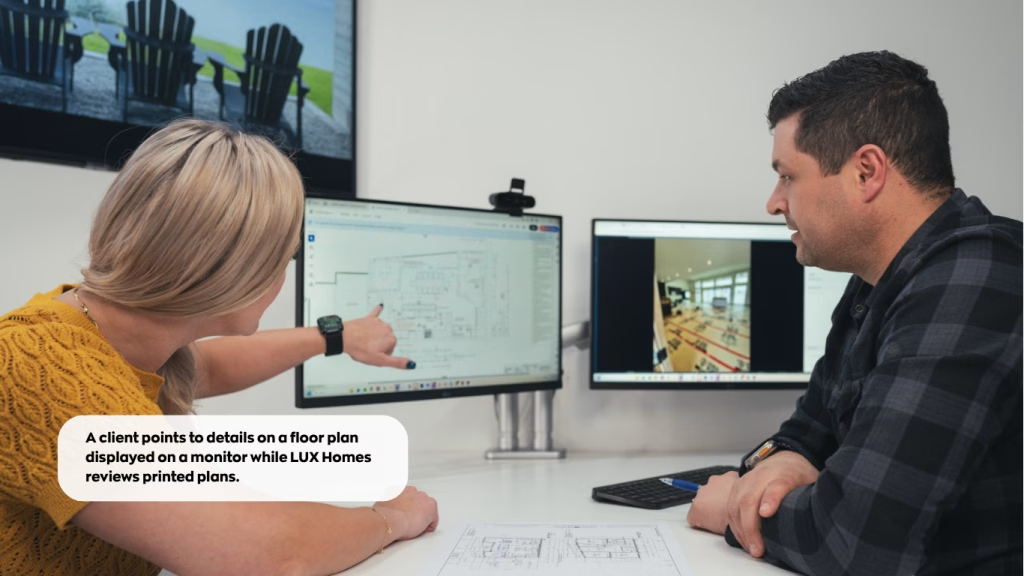
The Real Cost of Flexibility
One argument for cost-plus: it’s more flexible. Changing your mind mid-project is easier without formal change orders.
But we’re pushing back on that framing.
Flexibility without documentation is how budgets quietly bleed. A verbal agreement to upgrade the kitchen tile. A decision made on-site to move a wall. A conversation about the millwork that everyone remembered differently six weeks later. Each of those moments is a potential dispute, and the cumulative effect on a multi-million dollar build can be quite significant.
With fixed-price, changes go through a formal change order process: written scope, documented price, client approval, and THEN work begins. You can always say no. If you approve it, both parties are protected and the budget stays honest.
It’s not a lack of flexibility. It’s flexibility with a protected process. As one of our clients put it after signing on a multi-million-dollar custom home, after interviewing multiple builders, including cost-plus contractors, two things were non-negotiable for them: a true fixed-price contract and a guaranteed move-in date. LUX Homes promises both.
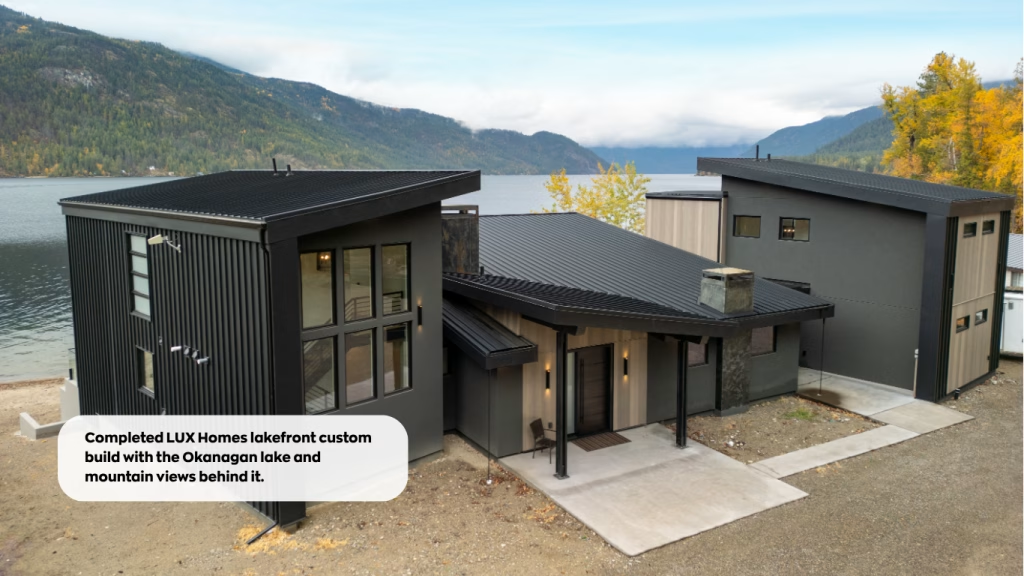
Fixed-Price vs. Cost-Plus: When Cost-Plus Makes Sense
In the spirit of an honest conversation: cost-plus is genuinely the right model for certain types of work.
For smaller renovations where the scope is difficult to fully define upfront, cost-plus gives a contractor the room to work through what they find without being penalized for unknowns. For exploratory or phased work where the next stage depends on what’s uncovered in the current one, an open-ended pricing structure makes sense. For emergency repairs or projects with highly variable conditions, cost-plus reflects reality more accurately than a fixed quote ever could.
When looking at whether fixed-price vs. cost-plus is better, the issue is not that cost-plus is a bad model.
The issue is that it is often the default model for large luxury custom home builds where the scope absolutely can be defined in advance. Where unknowns are know-able with sufficient pre-construction rigour. In those cases, cost-plus shifts risk to the client not because it has to, but because no one did the work to eliminate it.
Final Takeaway: Before You Sign, Know What You're Signing
All fixed-price vs. cost-plus debates aside. If you’re in the early stages of planning a custom home build or large renovation in the Okanagan, the most important thing you can do is understand what your contract actually protects. And what it does not.
A fixed-price contract from LUX Homes comes with over 150 pages of pre-construction documentation; every selection made before a shovel goes in the ground, and a price that doesn’t move. As a custom Okanagan home builder with a $2M project, the savings from no markup on overruns, no premium material orders made under time pressure, and no undocumented changes can reach six figures.
That’s worth understanding before you commit to one of the biggest investments of your life.